
We’ve all heard the truck stop legends: the driver who supposedly used some magic phrases to make an officer look the other way, or the guy who swore that flashing a clean log book instantly ended a level 1 inspection.
They are entertaining campfire stories, but out on the highway, they will get you an Out-of-Service (OOS) order. The truth is simple: DOT inspectors are highly trained professionals, and they’ve heard every excuse in the book hundreds of times. You can’t game a DOT inspection—but you can completely master how you handle one.
Protecting your CDL and keeping your company safety score spotless comes down to repeatable, bulletproof practices before you ever pull up to the scale house.
The Top “Triggers” That Snag an Inspection
Inspectors have a lot of leeway regarding who they choose to pull into the bays. According to the Federal Motor Carrier Safety Administration (FMCSA), most roadside inspections are triggered by obvious, visible indicators that catch an officer’s eye.
Avoid these common mistakes:
- Obvious Equipment Neglect: A cracked windshield, a visible cargo tie-down flapping in the wind, or a thick layer of road grime caked over your lights. A dirty truck signals to an inspector that you might be cutting corners elsewhere.
- Basic Traffic Mistakes: Speeding in construction zones, following too closely, or failing to use seat belts.
- In-Cab Visuals: Having a radar detector mounted on the glass or visibly holding a phone while rolling.
The Strategy: Control What’s in Your Hands
Since you can’t control random checks, your best defense is ensuring your paperwork and your rig are completely bulletproof.
1. Perform a Legitimate Pre-Trip (Every Single Time)
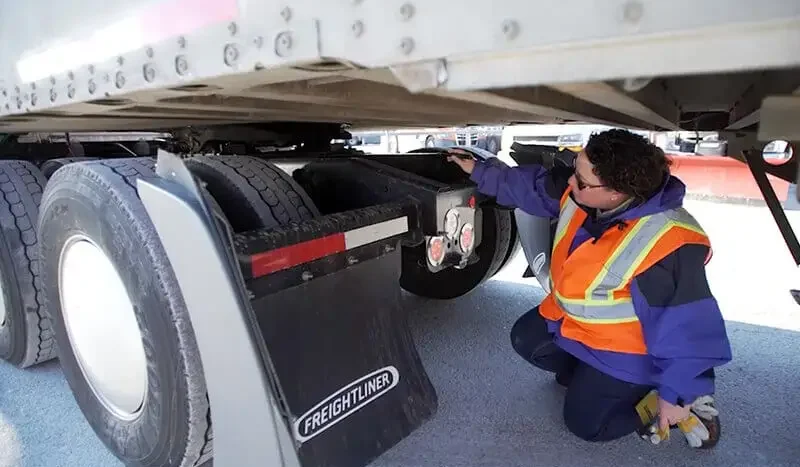
Most items on the common DOT violations list are visible to the naked eye. Things like an inoperative clearance light, worn brake pads, or a tire with less than 4/32-inch tread depth on the steer axle are instantly flagged. Catching these mechanical issues during a proper pre-trip inspection lets you handle them at the terminal or shop—not under an inspector’s flashlight.
2. Organize Your Dashboard and Documents
When an officer requests your paperwork, long delays or scrambling through the cab creates immediate suspicion. If your cab looks like a tornado hit it, the inspector assumes your operations are just as disorganized. Keep your medical card, registration, fuel tax logs, and shipping documents in a clean, accessible binder.
3. Handle Your Digital Logs Electronically
The fastest way to pass the driver portion of an inspection is to have clear, precise records. Long delays transferring or pulling up tracking info can turn a routine stop into a deeper audit.
Fleets utilizing comprehensive management platforms like ADUT provide drivers with an instant advantage. When your hours, dispatch history, and state-line mileage tracking data are continuously sync’d in a secure cloud ecosystem, you don’t have to guess or scramble. Showing an inspector a seamless, accurate log interface demonstrates complete compliance right out of the gate, helping you clear the scale bays much faster.
Scrambling for Paperwork -> Delays & Suspicion -> Deep Dive Inspection
Organized Digital Logs -> Fast Data Verification -> Fast Clearance
The Professional Playbook: You don’t need tricks or shortcuts to beat a DOT inspection. By combining an elite pre-trip routine with highly accurate digital tracking tools, you remove the guesswork entirely and keep your wheels rolling safely.